Field-Staff GPS Badges: Balancing Safety and Efficiency
The tension in field-staff management is straightforward: managers want to know where people are and what they did; employees worry about being monitored and losing privacy. A GPS smart badge is designed to find the balance between the two.
1. More than a clock-in device
Traditional field attendance relies on employees checking in themselves (photo, QR code, GPS check-in), which is easy to fake. A GPS badge records location traces automatically, so customer visits and inspection routes are documented without manual action.
| Item | Manual check-in | GPS smart badge |
|---|---|---|
| Visit authenticity | Can be proxied or back-filled | Continuous, tamper-evident traces |
| Management effort | Time-consuming verification | Automatic reports |
| Anomaly response | Found after the fact | Real-time alerts |
| Employee experience | Frequent manual steps | Wear-and-forget |
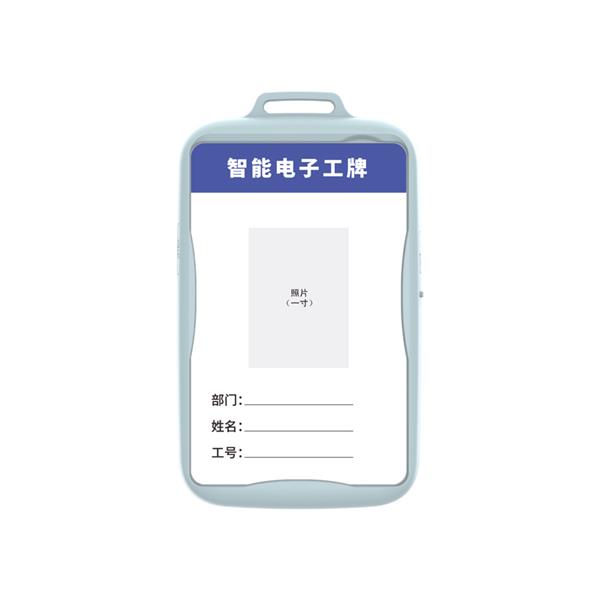
2. Safety backup: the SOS button is the core value
This is the badge's most valuable function. When a field worker goes alone to a remote area, works at night or encounters danger, holding the SOS button sends an precise location to emergency contacts.
Power-line inspection, gas pipeline maintenance, late-night sanitation work, outdoor equipment installation — in these scenarios a GPS badge is a genuine life-safety device, not merely a management tool.
Once SOS is triggered, the platform will:
· Immediately push an alert plus precise location to the administrator's phone
· Start audio recording on the badge (on some models)
· Automatically notify preconfigured emergency contacts
3. Privacy by design: avoiding employee resistance
A sensible tracking policy should ensure:
· Tracking only during working hours: the device sleeps after hours and records no location
· Data visible to the employee: staff can view their own traces in the app
· Tiered permissions: only the direct supervisor can view; HR and senior management need approval
· Notice and consent: disclosed clearly at onboarding, with a signed consent form
These design choices meet management needs while avoiding the sense of being continuously watched.
4. Typical use cases
| Industry | Core pain point | Badge value |
|---|---|---|
| Sales and field promotion | Visit authenticity hard to verify | Trace records, automatic check-in |
| Sanitation and cleaning | Attendance hard to verify | Attendance plus work-area geofence |
| Power and pipeline inspection | High outdoor safety risk | SOS plus geofencing |
| Property management and maintenance | Low dispatch efficiency | Nearest-person dispatch |
| Last-mile logistics | Opaque delivery routes | Track playback, customer notification |
5. Selection criteria
· Battery life: at least 7 days in smart mode, to avoid daily charging
· Water and dust resistance: at least IP65 for outdoor weather
· Weight: ≤60 g for comfortable all-day wear
· Buttons: the SOS button needs accidental-touch protection (3-second long press)
· Connectivity: 4G multi-band is better than 2G for coverage
After deploying badges, companies can optimize dispatch routes, reduce false visit reports and respond quickly in emergencies. More importantly, employees see that the company takes safety seriously, which tends to increase engagement.
GPSAI's personnel tracking solution supports GPS badges, tracking ID cards and mobile apps, with tracking policies configurable per role.