For logistics, delivery and engineering companies running dozens or even hundreds of vehicles, the core pain of fleet management is that vehicles are "invisible, unmanageable and unaccountable". GPS tracking platforms are systematically removing those problems. This article breaks the value down with published industry data.
According to publicly available logistics industry data, the cost structure of a road transport company is roughly 30% fuel, 25% labour and 20% vehicle depreciation and maintenance. Hidden waste from poor scheduling, abnormal idling and suboptimal routing typically accounts for 3%–8% of total cost.
A mid-sized fleet of 50 vehicles spends roughly RMB 8–15 million a year on operations. At a 5% optimization potential, that is about RMB 400,000–750,000 — precisely the value range a GPS platform helps a company unlock gradually.
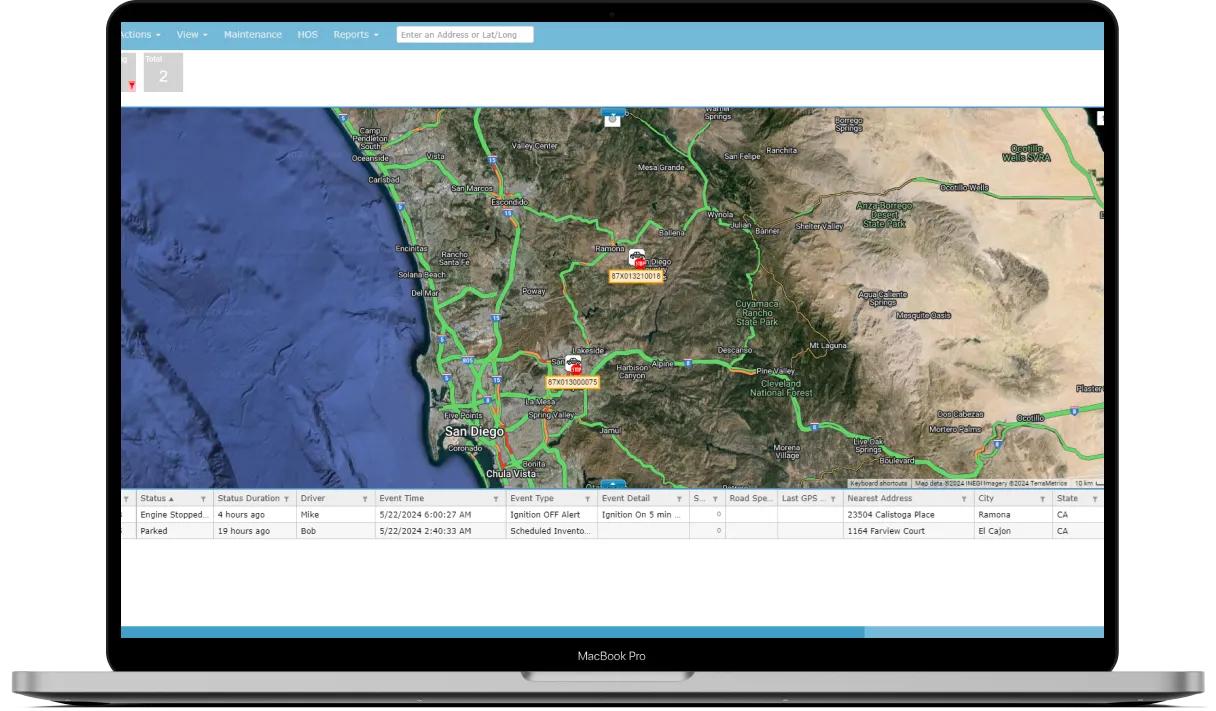
Traditional fleet management relies on drivers phoning in their position, with information lagging by 30 minutes or more. A GPS platform reports position every 10–30 seconds, so the dispatch centre sees live location, speed, heading and status (moving/idling/offline) for every vehicle on one map.
This produces three immediate improvements:
· Faster dispatch: assign the nearest vehicle, cutting phone calls and waiting time
· Lower empty running: match backhaul loads against live position
· Earlier detection: long dwell time and route deviation are visible immediately
When there is an accident, a customer complaint or a route dispute, playback of the historical track is the strongest evidence. Platforms typically retain 90 days or more of trace data and can replay any period to reconstruct the vehicle's exact path.
One city delivery company had a customer complain about a "2-hour delay". The trace showed the vehicle had been rerouted because of a motorway closure; the track plus timestamps made the case complete, the customer withdrew the deduction and kept the contract. Disputes of this kind occur three to five times a month, each costing hundreds to thousands of yuan.
Set virtual fences around customer warehouses, delivery points and restricted zones, and the platform automatically pushes alerts to administrators when a vehicle leaves the area, dwells too long, or is used outside working hours:
| Fence type | Trigger | Management value |
|---|---|---|
| Customer site fence | Automatic check-in/out | Replaces manual sign-off |
| Restricted-zone fence | Boundary crossing alert | Avoids restricted or banned areas |
| Night driving fence | Alert for use outside hours | Prevents private use of company vehicles |
| Over-dwell alert | Dwell time over 30 minutes | Prevents fatigue and side jobs |
With an OBD interface or fuel sensor, the platform can measure fuel consumption per 100 km, idle time and counts of hard acceleration and braking per vehicle. Published cases suggest that introducing driving-behaviour analysis lowers average fuel consumption by 5%–8% and reduces incident rates.
Take an urban delivery light truck spending RMB 60,000–80,000 a year on fuel. Route optimization and idle management can save 5%–8%, or RMB 3,000–6,000 per vehicle per year. Across 50 vehicles that is RMB 150,000–300,000 a year, usually recovering the platform investment within one to two years.
The following ranges are for a 50-vehicle fleet; actual results depend on vehicle type, routes and management maturity:
| Item | Annual investment | Expected annual saving |
|---|---|---|
| GPS hardware (50 units) | ≈ RMB 15,000–25,000 (one-off) | — |
| Platform subscription | ≈ RMB 12,000–24,000 | — |
| Fuel and idle optimization | — | ≈ RMB 100,000–250,000 |
| Reduced empty running | — | ≈ RMB 50,000–150,000 |
| Fewer incidents and disputes | — | ≈ RMB 20,000–80,000 |
| Total | ≈ RMB 27,000–49,000 | ≈ RMB 170,000–480,000 |
Payback is typically 6–12 months, depending on the fleet's management baseline and how deeply the platform is used.
Choosing a GPS tracking platform is not buying hardware — it is building digital fleet-management infrastructure. Prioritize these checks:
· Device compatibility: support for multi-brand GPS terminals, OBD and fuel sensors
· Platform stability: SLA guarantees and at least 90 days of data retention
· Open API: can it connect to your existing TMS/ERP
· On-premise option: can it be deployed to your own servers when data is sensitive
GPSAI offers both SaaS and on-premise deployment, multi-protocol device access and API-based customization, so you can choose according to fleet size.